Calls and Callbacks Process
Last updated: June 30, 2026
Purpose: This document is intended to provide an overview of how recruiters use the PRM Calls and Callbacks pages to review call activity, identify patients who require follow-up, understand automatic callback classification, and document callback work.
Process
The PRM includes both a Calls page and a Callbacks page. The Calls page is used for reviewing all call activity. The Callbacks page is used for follow-up work on calls that require additional action.
Calls Page
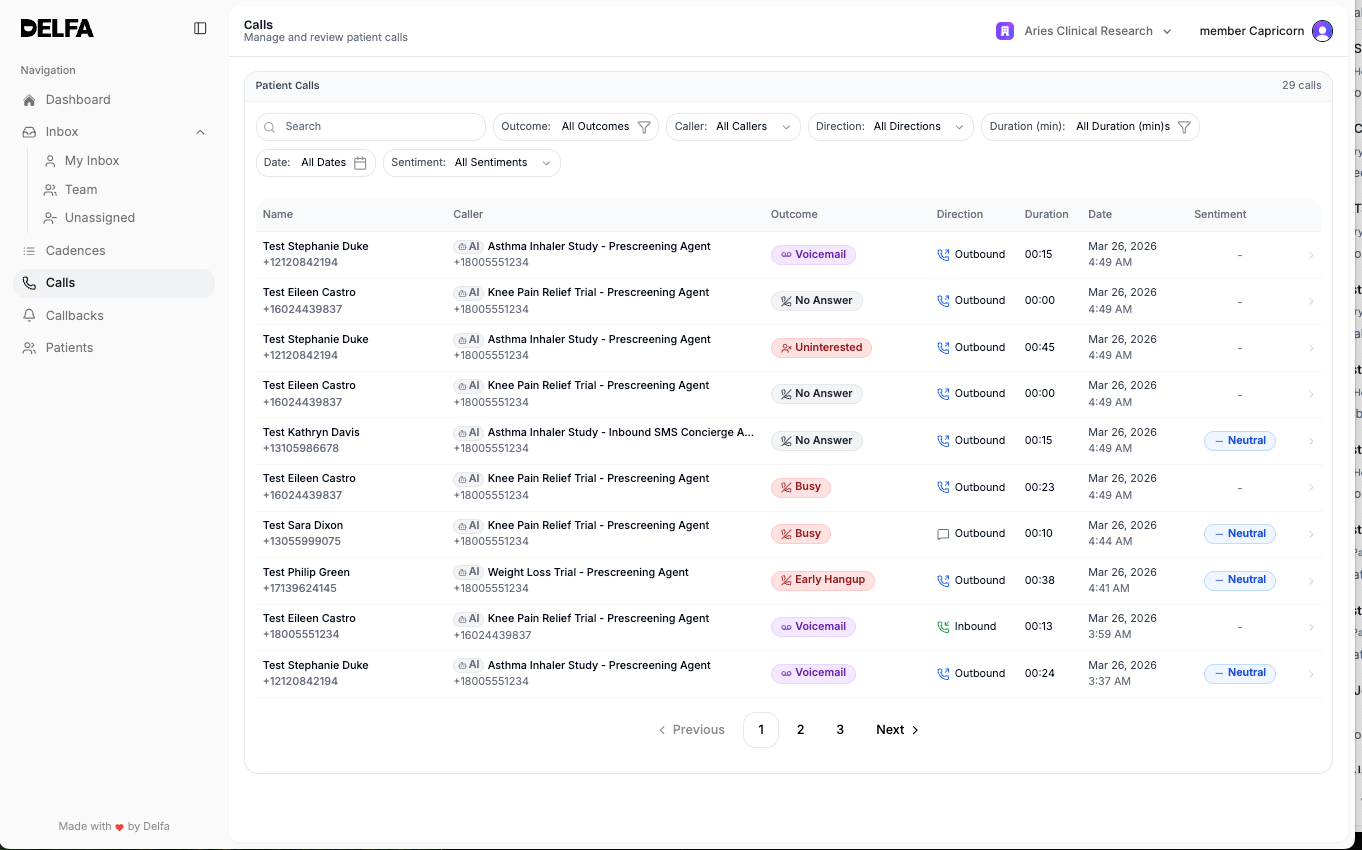
Use the Calls page when you need to review completed or in-progress call activity across patients.
Call Filters
- Outcome
- Caller
- Direction
- Duration
- Date
- Sentiment
Calls Workflow
1. Open the Calls page.
2. Apply filters to narrow the list.
3. Use search to find a patient or call quickly.
4. Open the call detail view for any call that needs review.
5. Review the call record before taking any follow-up action elsewhere in the PRM.
Callbacks Page
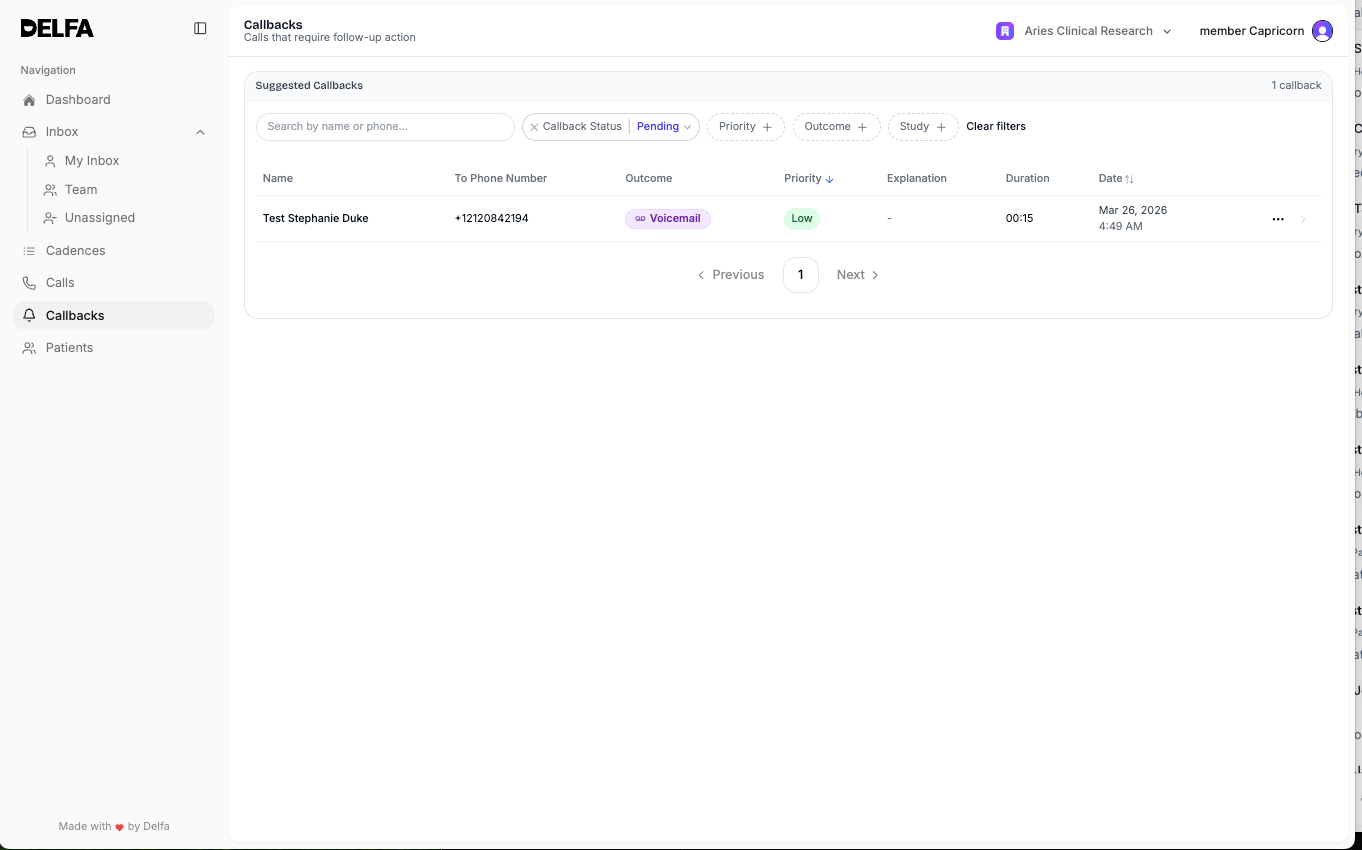
Use the Callbacks page to review the queue of calls that require follow-up.
Automatic Callback Classification
- Callback records are generated automatically after calls are classified by the system.
- The callback explanation and priority are intended to help recruiters understand why the call was flagged for follow-up.
- When a call is classified as needing human follow-up, the PRM also creates a human callback task so the patient can be prioritized for follow-up in the Inbox.
- Recruiters should still review the call details before taking action, since the callback list is a prioritization tool and not a replacement for recruiter judgment.
Callback Filters
- Callback Status
- Callback Priority
- Outcome
- Study
- Search by patient name or phone
Callbacks Workflow
1. Open the Callbacks page.
2. Review the Suggested Callbacks list and the automatically assigned callback priority.
3. Apply filters to focus on the callbacks that should be worked first.
4. Open Callback Details for the selected call.
5. Review the overview, transcript, explanation, and callback comments before updating the callback.
6. Complete the related follow-up in the patient’s workflow and use the Inbox task queue when callback work needs to be prioritized there.
Callback Management
Callback Required
- Use the Callback Required toggle to mark whether the call still requires follow-up.
- If a callback is newly required and no priority has been set, the system may default the callback to low priority.
- If a callback is marked as required, confirm that the follow-up task and patient prioritization still match the patient’s current situation.
Priority
- Set the callback priority to High, Medium, or Low based on urgency.
- Use priority consistently so the queue remains meaningful for the team.
Comments
- Add a callback comment each time follow-up work is attempted or completed.
- Use comments to document attempts, patient responses, scheduling outcomes, or reasons the callback remains open.
- Update or delete your own comments when corrections are needed.
Status Actions
- Use Mark Complete when callback work has been finished.
- Use Archive when the callback should no longer remain active but should still be retained as a record.
- Use Reopen if additional callback work is required after a callback was completed or archived.
Transcript Review
- Use the Transcript tab to review the call transcript and audio when available.
- Review the transcript before documenting callback reasoning if the outcome is unclear from the call overview.
Best Practices
- Work from the Callbacks page when the goal is follow-up, not general call review.
- Treat the callback explanation and priority as system guidance that should be confirmed by reviewing the call.
- Use comments before changing callback status so the reason for the change is documented.
- Review the call overview and transcript before archiving or marking a callback complete.
- Use the Inbox task workflow to manage human callback follow-up once the callback has been reviewed.
- Keep callback status and priority current so other recruiters can work the queue effectively.